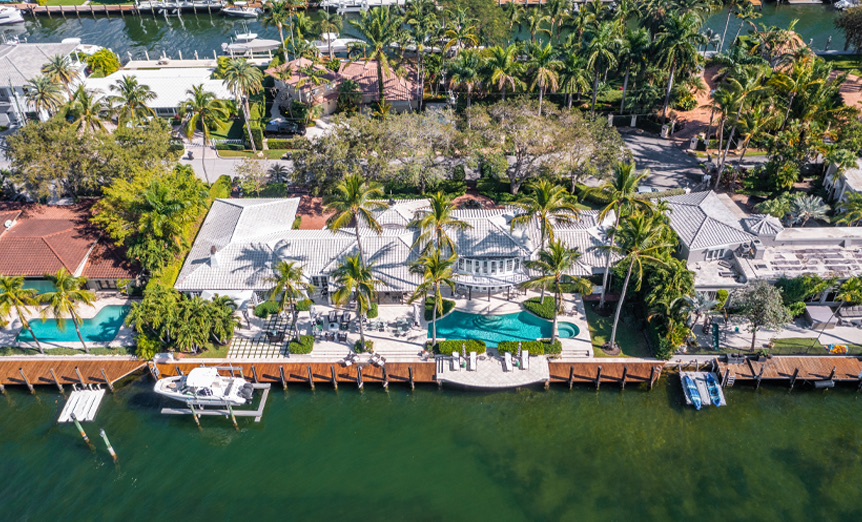
If you’re planning a custom home near a Florida beach, the CCCL permit Florida process is often one of the first regulatory questions to answer. This guide explains what DEP reviews, how coastal permitting shapes timelines and budgets, and what to check before you commit to a property or a set of plans.
What Is the Coastal Construction Control Line (CCCL)?
According to the Florida Department of Environmental Protection, the CCCL marks the landward limit of the state’s regulatory authority along certain sandy beaches. Seaward of the line, special siting and design criteria apply because that area is expected to experience stronger storm forces, including wave action, erosion, and storm surge.
The program protects beaches, dunes, adjacent properties, public access, and sea turtle habitat while allowing reasonable use of private property. DEP has established CCCLs in 25 coastal counties, and a line can be re-established after significant shoreline change. Its location is property-specific: two lots on the same street can relate to it very differently.
CCCL Permit Florida Basics: When Is a Permit Required?
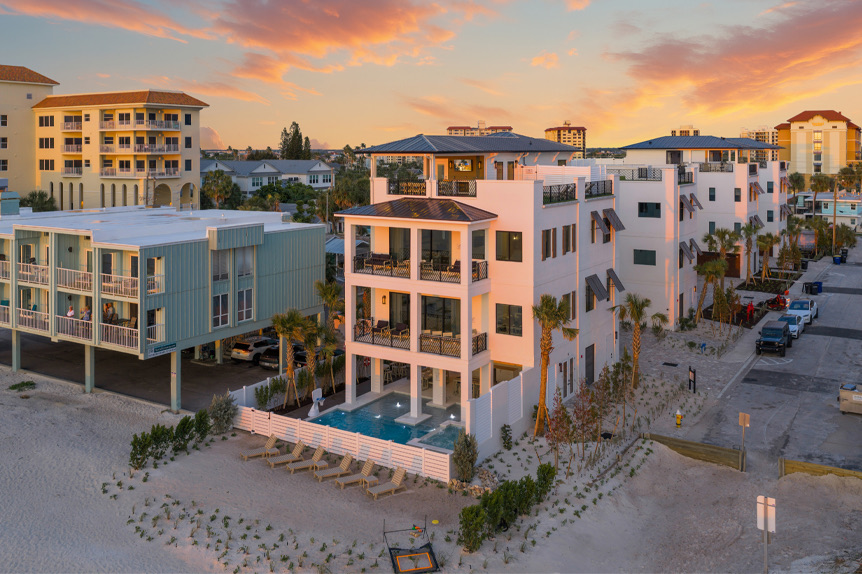
DEP states that, unless otherwise exempt, a permit is required for construction and excavation activities seaward of the CCCL. Depending on the property and the proposed work, that can include:
- New single-family homes and major structures
- Additions or expansions to an existing home
- Swimming pools, decks, patios, and driveways
- Seawalls, bulkheads, and other coastal armoring
- Dune walkovers, grading, excavation, and fill
- Exterior lighting, landscaping, and site work that affects the dune system
Some activities are exempt, such as certain minor activities and limited repairs that meet specific conditions. The exemptions are narrow and set out in Rule 62B-33.004, F.A.C. Whether a permit is required always depends on the specific property, its location relative to the line, the proposed activity, and any applicable exemption.
How Do You Know If a Property Is in the CCCL?
Don’t assume every beachfront property is regulated the same way. DEP’s Locate the CCCL page explains how to use its Map Direct tool, which shows the line in red alongside coastal range monuments and past permit locations. Treat that as a starting point: confirm the line on a current signed-and-sealed survey, and DEP’s CCCL permit managers can answer jurisdiction questions for your county.
CCCL Permit vs. Local Building Permit
A Florida DEP coastal permit and a local building permit serve different purposes. Most regulated coastal projects need both.
| CCCL Permit (State) | Local Building Permit | |
|---|---|---|
| Issued by | Florida DEP | City or county building department |
| Main focus | Impacts on the beach and dune system, siting, and coastal design criteria | Building code, zoning, setbacks, inspections, and occupancy |
| Where it applies | Seaward of the CCCL, unless exempt | Virtually all construction within the jurisdiction |
| Key standards | Chapter 161, F.S., and Chapter 62B-33, F.A.C. | Florida Building Code, local codes, and floodplain ordinances |
| Replaces the other? | No | No |
DEP’s individual permit application even asks for local confirmation that the project meets zoning and setback rules. CCCL approval does not mean a project has satisfied the Florida Building Code, local zoning, FEMA floodplain rules, or any other requirement.
CCCL and FEMA Flood Zones: Two Separate Considerations
Many Gulf Coast properties have both CCCL and flood-zone requirements, but they’re separate considerations. The CCCL is a state coastal-protection boundary. Flood zones and Base Flood Elevations (BFEs) come from FEMA flood maps, which you can look up through the FEMA Flood Map Service Center, and are enforced locally through floodplain management rules and the Florida Building Code. Your finished floor height, foundation type, and building materials may be shaped by both.
What Does Florida DEP Review?
A DEP coastal permit review looks at how the project interacts with the coastal system, including:
- Building location: how far seaward the structure sits
- Design and engineering: foundations, elevation, and resistance to coastal storm forces
- Dune protection: excavation, grading, and native vegetation impacts
- Environmental considerations: sea turtle habitat and exterior lighting
- Access and neighbors: effects on public access and adjacent properties
CCCL Permit Requirements: What to Expect
There’s no universal checklist. DEP offers several permit types, including Individual, General, Emergency, and Dune Core permits, and each has its own form and requirements. DEP’s CCCL permit application guidelines describe items commonly requested for an individual permit, such as:
- Proof of ownership and a legal description
- A signed and sealed survey
- Site, grading, and cross-section plans prepared by Florida-licensed professionals
- Foundation plans for major structures
- A written local zoning and setback confirmation
- Planting, lighting, and drainage details where applicable
- A construction schedule and the applicable fee
Requirements vary by project and site; current forms are on DEP’s CCCL forms page.
The CCCL Permitting Process, Step by Step

Property Review → CCCL Determination → Survey & Engineering → Application → DEP Review → Authorization → Local Permits → Construction.
- Determine jurisdiction. Confirm where the proposed work sits relative to the CCCL.
- Check for exemptions. Identify whether the activity qualifies for an exemption.
- Complete site evaluation and surveys. Document the site, dune conditions, and existing structures.
- Prepare plans and supporting documents. Coordinate architectural, engineering, and site plans.
- Submit the DEP application. Use the application type that fits the project.
- Respond to agency requests. Address any requests for additional information.
- Receive authorization. Do not begin regulated work until the applicable approval is issued.
- Coordinate local permits. Complete local building, zoning, and floodplain approvals before construction.
CCCL Permit Timeline
There’s no single answer to how long a CCCL permit takes. For Individual permits, DEP’s guidelines describe up to 30 days to review an application for completeness and final agency action within 90 days after the requested information is received. For General permits, DEP has up to 30 days to approve or deny. These are agency review periods, not total project timelines.
Actual timing depends on completeness, complexity, requests for additional information, environmental considerations, and coordinating local approvals.
How Coastal Permitting Affects Your Construction Schedule
If DEP review prompts a change to the home’s footprint or foundation, plans, engineering, and local submittals may need updates too. Starting permitting early, ideally during site evaluation, gives the team time to resolve these questions before they affect the construction schedule.
CCCL Permit Cost
DEP Application Fees
DEP sets the application fee for an Individual permit by structure type and size. The total is the sum of the amounts below for everything on your application, according to DEP’s CCCL permit fee worksheet (last revised April 2025) and Rule 62B-33.0085, F.A.C.:
- Single-family home, roof footprint of 2,400 square feet or less: $2,000
- Single-family home, roof footprint over 2,400 square feet: $4,000
- Pool, garage, cabana, or other non-habitable major structure: $1,000 each
- Addition to a single-family home: $1,000
- One minor structure: $300 (multiple minor structures: $500)
- Seawall or other rigid coastal structure: $3,000 for the first 100 feet, plus $500 for each additional 50 feet
For example, a new home with a 2,200-square-foot roof footprint and a pool comes to $3,000 on the worksheet ($2,000 plus $1,000). DEP takes 10 percent off applications filed electronically, which brings that example to $2,700.
A few rules affect when and how much you pay:
- DEP does not treat an application as complete until it has received the fee, so send it with the application.
- Changing the design after the permit is issued costs $500 for a revision to a permitted major structure. Adding a new structure costs $500 or that structure’s fee, whichever is greater.
- DEP does not refund the fee if you withdraw the application or DEP denies it.
- DEP charges no fee for emergency permits, permit transfers, field permits, or exemption determinations. Field permits for dune walkovers and decks that meet DEP standards are available at no cost from DEP field representatives.
General Permit fees are set separately in Rule 62B-34.040, F.A.C., which DEP points to on its CCCL forms page.
Other Costs to Budget For
The DEP fee covers only the application. These items are billed separately by the firms you hire, and DEP does not set their prices:
- The signed and sealed survey and the site, grading, and foundation plans listed in DEP’s permit application guidelines
- Coastal and structural engineering for the foundation and the building
- Redesign work if DEP’s review changes the home’s footprint or foundation, plus the $500 revision fee if the permit has already been issued
- The foundation system your engineer specifies, such as the piling systems common on Gulf Coast barrier islands
- Local building permit fees, which your city or county sets
Get a written quote for each of these before you close on a lot, and add DEP’s fee to the total.
Common CCCL Permitting Pitfalls
- Assuming every beachfront property is subject to the same CCCL requirements
- Discovering the CCCL after the home’s design is complete
- Starting local planning without understanding state coastal requirements
- Submitting incomplete surveys or engineering documents
- Underestimating dune or native vegetation considerations
- Failing to coordinate CCCL, FEMA, and local requirements
- Making design changes after permitting has begun
- Assuming a prior permit for another property applies to a new project
- Starting work before the required authorization is obtained
Before You Buy a Coastal Lot: A Practical Checklist
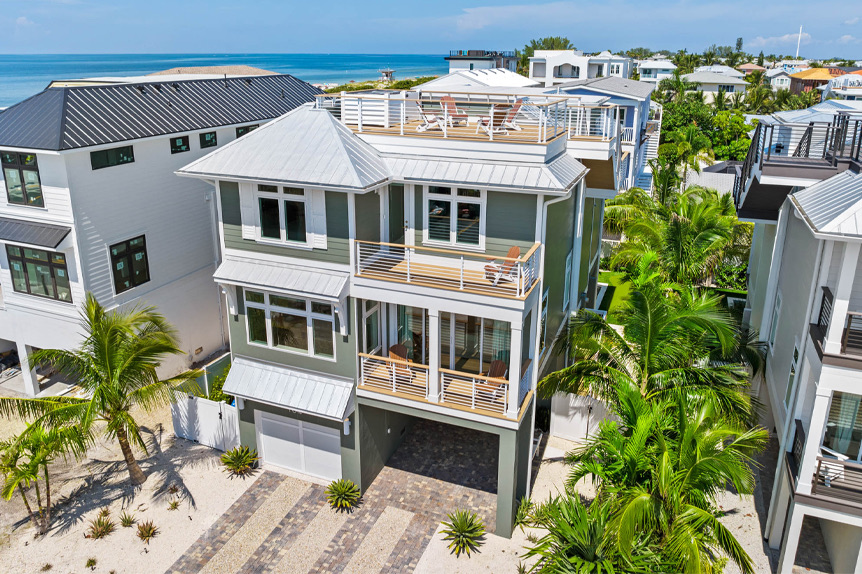
Before closing on a Gulf Coast lot, review:
- CCCL location relative to the property and intended building area
- Flood-zone designation on current FEMA maps
- Base Flood Elevation and its effect on floor height and foundation
- Buildable area after setbacks and coastal constraints
- Coastal setbacks under state and local rules
- Existing structures and whether they’ll be kept, modified, or removed
- Dune conditions and native vegetation
- Access and utilities, including driveway and service connections
- Potential permitting requirements at the state and local levels
- Estimated design and engineering needs for the site
Why Work With a Builder Experienced in Coastal Permitting?
Coastal projects involve architects, engineers, surveyors, permitting professionals, and the construction team. An experienced builder helps coordinate them so permitting requirements are addressed before construction begins.
Eason Builders Group (EBG) builds custom coastal homes across Florida’s Gulf Coast, with more than 15 years of experience and more than 200 coastal homes delivered. The EBG building process includes DEP permits, CCCL compliance, flood-zone engineering, and coastal setbacks as part of planning. You can learn more about the EBG construction process or browse the custom home portfolio. No builder can guarantee a permitting outcome, but early coordination helps owners make informed decisions.
Frequently Asked Questions
What is a CCCL permit in Florida?
A Florida DEP authorization for regulated work seaward of the Coastal Construction Control Line, unless an exemption applies.
What does CCCL stand for?
Coastal Construction Control Line.
When is a CCCL permit required?
Generally, when construction or excavation is proposed seaward of the CCCL and no exemption applies.
How long does a CCCL permit take?
It varies by permit type, completeness, and complexity. See the timeline section above.
How much does a CCCL permit cost?
Fees depend on the permit type and project. Check DEP’s current fee worksheet.
How do I know if my property is inside the CCCL?
Start with DEP’s Map Direct tool, then confirm with a current survey.
Is a CCCL permit the same as a building permit?
No. You’ll typically still need local building, zoning, and floodplain approvals.
Can I build a pool in the CCCL?
Often, yes, subject to review. Approval and placement depend on the site, the dune system, and DEP’s siting criteria.
Do I need a CCCL permit for a remodel?
It depends. Some limited repairs may be exempt, while additions, foundation work, or seaward expansions often require review. Confirm with DEP first.
What happens if I build without a CCCL permit?
DEP can take enforcement action, which may include administrative fines and requirements to correct or remove the work and restore the site.
Plan Your Coastal Project With Confidence
Planning to build or remodel near the Florida coast? Contact Eason Builders Group to discuss your property, permitting requirements, and the next steps for your coastal project.
Disclaimer: This article is general educational information, not engineering, legal, or insurance advice. Flood-zone and permitting requirements vary by property, flood zone, jurisdiction, and applicable regulations. Confirm requirements for a specific parcel with your local building department, a Florida-licensed design professional, and a licensed insurance agent.
Tags
- CCCL
- Coastal Construction
- Coastal Permitting
- Florida
- Florida DEP